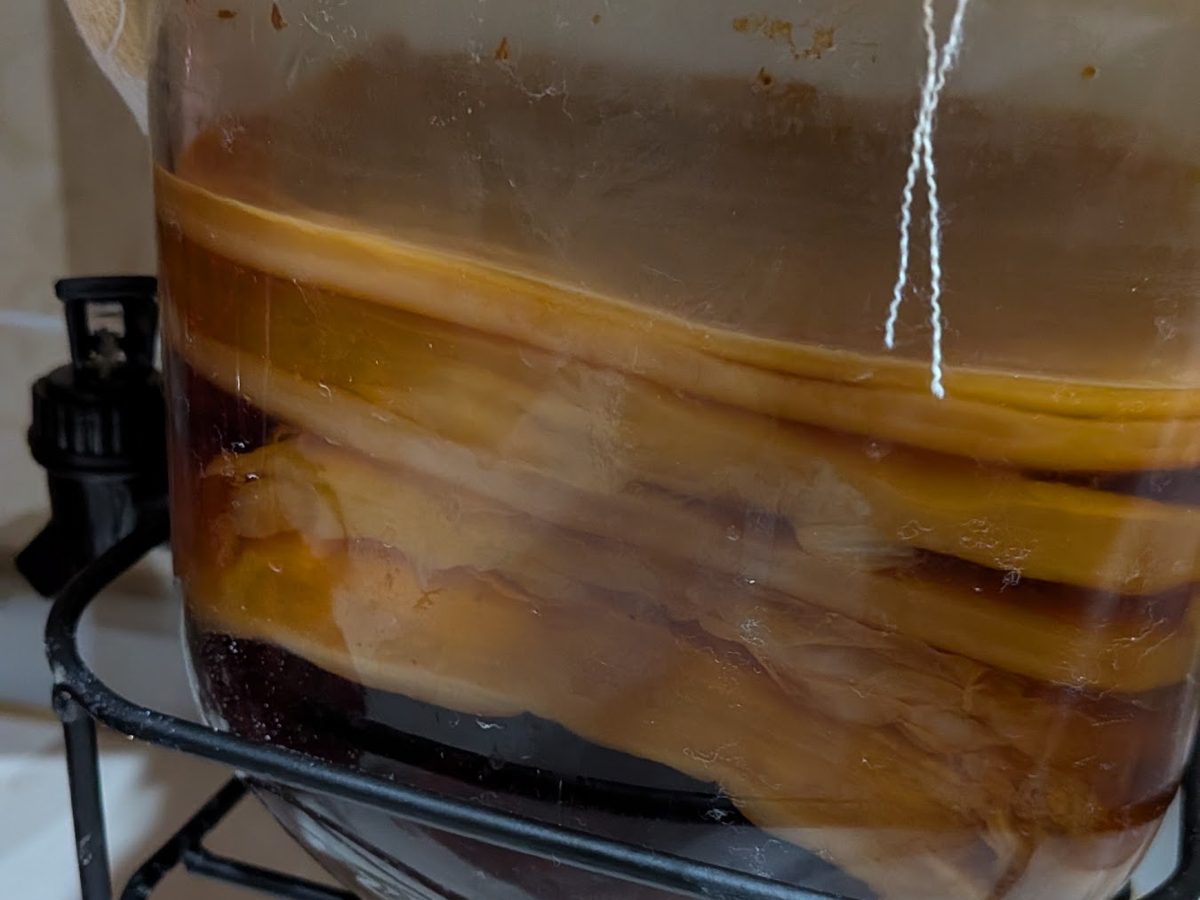
Ingredients
- Water2.7 L
- Black tea18 g
- Sugar210 g
- Starter kombucha300 ml
- SCOBY1
Method
- Bring about a liter of the water to a boil, turn off the heat and steep the black tea for ten minutes. Strain.
- Dissolve the sugar in the hot tea, then add the rest of the water, cold: before it meets the SCOBY the tea must drop below 30 °C.
- Pour into a wide-mouth glass jar, add the starter kombucha (a tenth of the total: it brings right away the acidity that protects the tea) and lay the SCOBY on top.
- Cover with a tightly woven cloth held by a rubber band: air must get in, fruit flies must not. Keep at 24 °C, out of direct sun, and don't move the jar.
- From the fifth day, taste with a straw: from sweet it gets more and more sour. After 8 days it is usually balanced; you decide when to stop.
- With clean hands, lift out the SCOBY and set it aside with a tenth of the kombucha, for the next round. Bottle the rest: straight into the fridge, or two days at room temperature in swing-top bottles, for bubbles.
Day by day
- Days 1–2 · SCOBY adaptation
- Measure the pH · Measure the temperature
- Days 3–6 · F1 Fermentation
- Measure the temperature · Measure the pH · Measure the titratable acidity
- Days 7–8 · Taste and decide
- Taste it and note how it is · Measure the pH · Measure the titratable acidity
What to keep an eye on
- pH below 4.6 by day 1
- Below 4.6 botulism bacteria cannot grow: it is a threshold that matters for acid foods. On its own it isn't enough: salt, temperature and processing count too
- Temperature no higher than 32 °C
- Too warm and the wrong microbes take over
These are the control points the app follows for this ferment. A number in range says that number is in range, not that a food is safe: when in doubt, don’t taste.
Worth reading
- KombuchaA “tea fungus” that split German botanists in 1913, and a drink that lives on cooperation between yeasts and bacteria.
- Mold on the SCOBYReal mold on kombucha: throw it all out
- New SCOBY isn’t formingNothing on the surface: fix the conditions
- Cloudy kombuchaYeast strands: completely normal
Written by the Fermentation Lab team, the same text as the app's Library. Found a mistake? Write to us: fermentationlabapp@gmail.com